
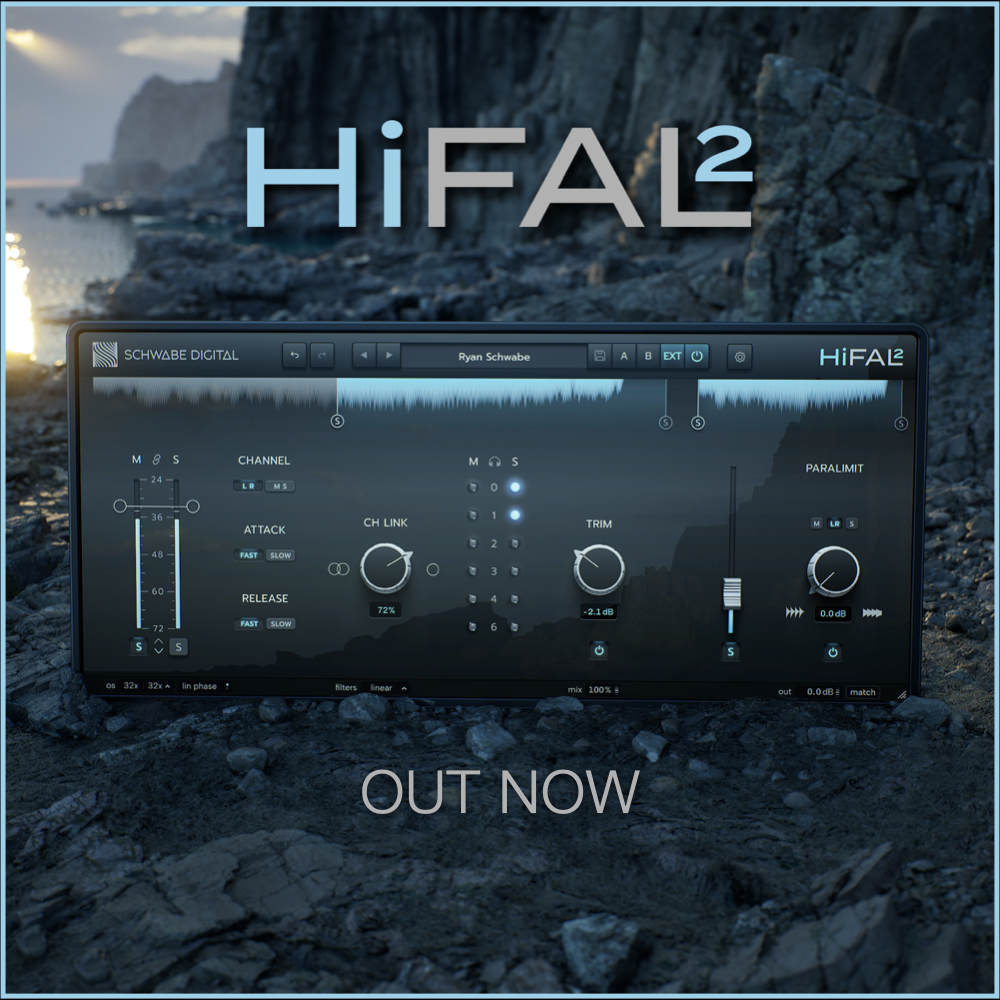
HiFAL 2 is Here
What started as an update turned into a pretty substantial rebuild. A lot of HiFAL 2 is now built around SchwabeCore, the new underlying technology platform we have been developing for Schwabe Digital plugins.
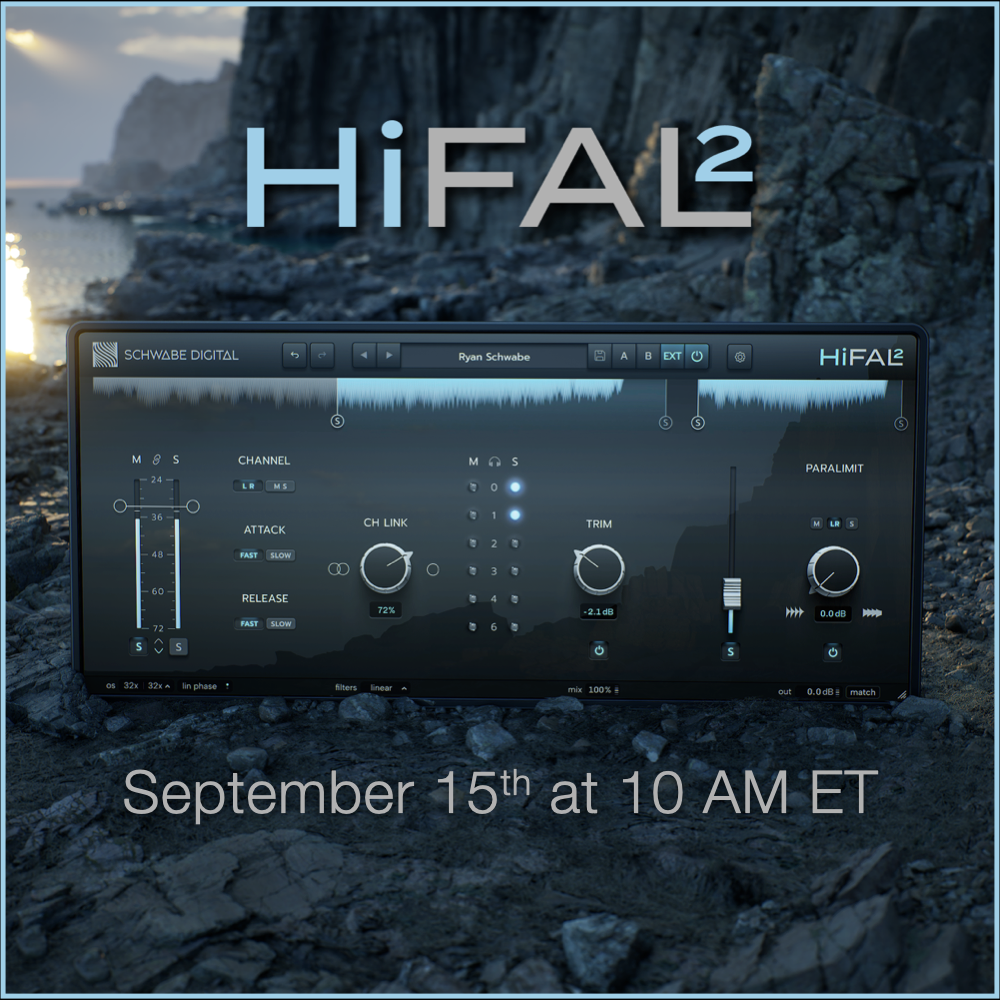
HiFAL 2 is Coming
HiFAL 2 is Coming.
The concept is the same, but pretty much everything underneath it is new.
HiFAL 2 introduces SchwabeCore, a completely rebuilt filter bank with new filter modes, and a new approach to high-frequency stereo imaging using HiFAL’s acceleration limiting.
We also refined the interface and added some new tools, while keeping HiFAL simple and easy to use.
HiFAL 2 is a FREE UPDATE for all HiFAL owners and Rent-to-Own users. It uses the same license, and all your existing sessions will recall exactly as they should.
HiFAL 2 will be available September 15th at 10 AM ET.
More soon.
01) HiFAL 2: Comfortably Brighter
HiFAL 2 (High Frequency Acceleration Limiter, pronounced “High Fall”) brings a classic vinyl mastering technique into the modern era. Using an often overlooked approach to high-frequency processing, HiFAL 2 lets you shape brightness, transient detail, and stereo image as subtly or aggressively as your mix needs. Designed for the mix bus, HiFAL 2 is jsut as useful anywhere in your mix where high frequencies need attention.
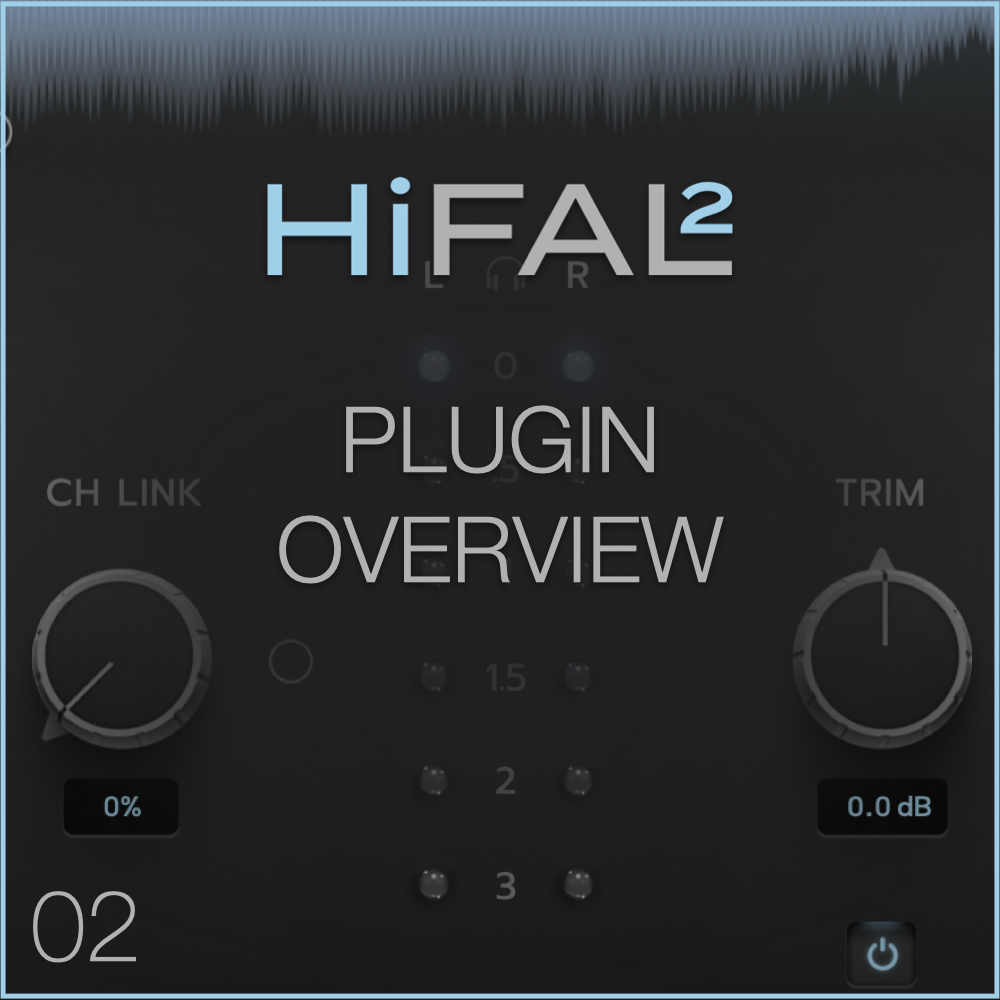
02) Overview of HiFAL
HiFAL 2 has two processing sections: the Main high-frequency acceleration limiter and the Parallel Limiter, called PARALIMIT. The Main processor includes a Dry/Wet control in the footer for blending the processed and unprocessed signals. PARALIMIT operates as a separate parallel processing path alongside the Main processor. Each section can be turned on or off using the power button in the bottom-right corner of its section.
03) PARALIMIT: A New Dimension in High-End Processing
The idea was partly inspired by an old parallel compression technique. One version of the classic Motown vocal trick was to duplicate a vocal, high-pass it, compress it heavily, and blend it back underneath the original.
The original vocal maintains its dynamics, while the compressed high-frequency layer adds clarity, presence, and density. Here is a quick video explaining the Motown approach and how it inspired PARALIMIT.
04) Understanding Metering & Ceiling Threshold Needle
The input meter in HiFAL shows the level of the filtered input signal. For example, if the Low Frequency Crossover Flag is set to 2.5kHz and the High Frequency Crossover Flag is bypassed, the meter only reflects the amplitude of frequencies above 2.5kHz.
As you raise the Low Frequency Crossover Flag, you’ll likely see a drop in the meter reading, since higher frequencies usually have lower amplitude. While it’s uncommon for an input meter to reflect a filtered signal, it makes sense here because HiFAL applies dynamic processing to an isolated frequency band.
05) Channel Select and Linking Techniques
HiFAL can operate in either LR (Left/Right) or MS (Mid/Side) mode, giving you different ways to control high-frequency dynamics across the stereo image. When switching modes, both the input and gain reduction meters update between LR and MS.
06) Attack & Release of an Acceleration Limiter
HiFAL 2 uses a sophisticated, sample-by-sample approach to compression that dynamically adjusts attack and release times based on the amount of gain reduction. While computationally intensive, this process results in exceptionally smooth and transparent high-frequency limiting. As gain reduction increases, the attack and release accelerate in response to the signal. This dynamic movement is the core idea behind HiFAL: a high frequency limiter that doesn’t just react, but adapts in real time.
Because the timing constantly changes in response to the input signal and threshold, HiFAL does not offer user-definable attack and release controls. Fixed values wouldn’t behave meaningfully in this context. Instead, HiFAL delivers natural-sounding dynamic control without too much manual adjustment.
07) Gain Reduction Meter & Delta
Visualizing gain reduction can strongly influence how we make decisions while listening. Because visual perception often takes precedence over auditory perception, the way an effect looks on meters can shape how we hear it and how we use it in a mix or master. This mismatch is similar to the McGurk effect, where what we see can actually overrides what we hear.
08) Using Trim as Balance Control
Trim applies up to +6dB or -6dB of gain to the HiFAL process band. While simple, this control is essential for rightsizing high frequencies within a mix or sound. When using high frequency acceleration limiting, two key factors come into play:
HF Dynamics – set by how much limiting occurs
HF Loudness – the level of the high band relative to the rest of the mix.
09) Crossover Flags & Momentary Solo
The main HiFAL and Parallel Limiter modules include both Low Frequency and High Frequency Crossover Flags. These define the process band and are adjustable from 1 kHz to 20 kHz, with built-in logic that maintains at least half an octave of separation between them. If one flag moves too close to the other, the system automatically adjusts to preserve spacing.
10) Using HiFAL’s Tuned Tonal Balance Display
This is one of my favorite additions to HiFAL. I was initially worried that big gain reduction meters might influence how I compress, so I kept them minimal. The Tonal Balance Display is the opposite—I made it large and visually dominant on purpose.
11) Shaping the High End with PARALIMIT
We have already looked at the idea behind PARALIMIT and its M, LR, and S channel modes. Now I want to get into how the processor actually works and how I use its controls.
PARALIMIT isolates a mid or high-frequency band, applies acceleration limiting, and blends that processed signal back in parallel with the Main HiFAL processor.
12) Better Stem Printing with HiFAL 2
HiFAL includes an external sidechain input, labeled EXT at the top of the plugin. This lets you patch in an external signal to control the key input of both the main and parallel limiter.
When active, the EXT side-chain replaces the input as the trigger for compression. Gain reduction follows the filter settings and is applied in response to the external signal. This lets you use techniques like instrument ducking to unmask one track, apply frequency-based shaping, or create side-chain-driven midrange s

In Defense of Resonances in Modern Music
Resonant suppressors promise smoothness and control. They identify frequency spikes and automatically notch them down with dozens, or sometimes hundreds of narrow, minimum-phase EQ filters. It does its job, but it comes at a cost.

Where I Put HiFAL On My Mix Bus (And Why)
HiFAL is a tool designed to control the tonality, shape, and balance of the high frequencies in your mix.
When deciding where to place HiFAL on the mix bus, it helps to think about how loudness affects balance. As a master gets louder, the mix often feels brighter. This tonal change is dynamic, driven by how loudness processing reshapes high frequency energy in relation to the low end.

Free 30-Day HiFAL Trial + Setup Guide
Start your free 30-day trial and see how easy it is to set up HiFAL on your mix bus in 6 simple steps.

HiFAL is Here!
HiFAL (pronounced High Fall) adapts a classic vinyl-era mastering technique for modern mixing and mastering. It’s a smart, adaptive, and transparent high-frequency acceleration limiter capable of smoothing brightness without dulling the mix. Powered by our adaptive attack and release technology, transients stay natural while harsh peaks are tamed without losing their shape. On the mix bus, in mastering, or on individual tracks, it delivers bright, clean, controlled top end beyond what typical EQs, suppressors, and compressors are capable of.