
10) Using HiFAL’s Tuned Tonal Balance Display
This is one of my favorite additions to HiFAL. I was initially worried that big gain reduction meters might influence how I compress, so I kept them minimal. The Tonal Balance Display is the opposite—I made it large and visually dominant on purpose.

It also ties directly into the name HiFAL (pronounced “High Fall”). The spectrum analyzer shows high frequencies falling down from the top of the interface. I thought it was a fun play on words and a fitting visualization for a tool designed to shape high-frequency energy. I had also never seen a tonal balance analyzer work this way, and I liked the experience it created for frequency selection.
But this isn’t just another spectrum analyzer. I specifically tuned it to reflect what I consider an ideal tonal balance for a modern mix. I took 50 of my all-time favorite mixes, averaged their spectral balances, and then EQ’d and filtered pink noise until it perfectly matched that average curve. That filtered pink noise became the calibration source for HiFAL’s Tonal Balance Display.
The result is not just visual. It is a useful guide for processing. If you see a buildup or resonance in the Tonal Balance Display, it may point to a frequency range worth targeting with Acceleration Limiting and negative Trim. If you see a hole or deviation in the display, that may be a candidate for isolating that range, applying slight limiting, and adding positive Trim or Parallel Limiting.
When the display appears relatively flat from left to right during the most energetic section of a track, typically the final chorus, your tonal balance is likely sitting in a good range. As always, use your ears.
Be well,
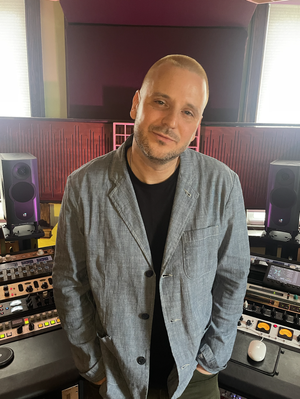
Ryan Schwabe
Grammy-nominated and multi-platinum mixing & mastering engineer
Founder of Schwabe Digital
HiFAL 2 (High Frequency Acceleration Limiter, pronounced “High Fall”) brings a classic vinyl mastering technique into the modern era. Using an often overlooked approach to high-frequency processing, HiFAL 2 lets you shape brightness, transient detail, and stereo image as subtly or aggressively as your mix needs. Designed for the mix bus, HiFAL 2 is jsut as useful anywhere in your mix where high frequencies need attention.